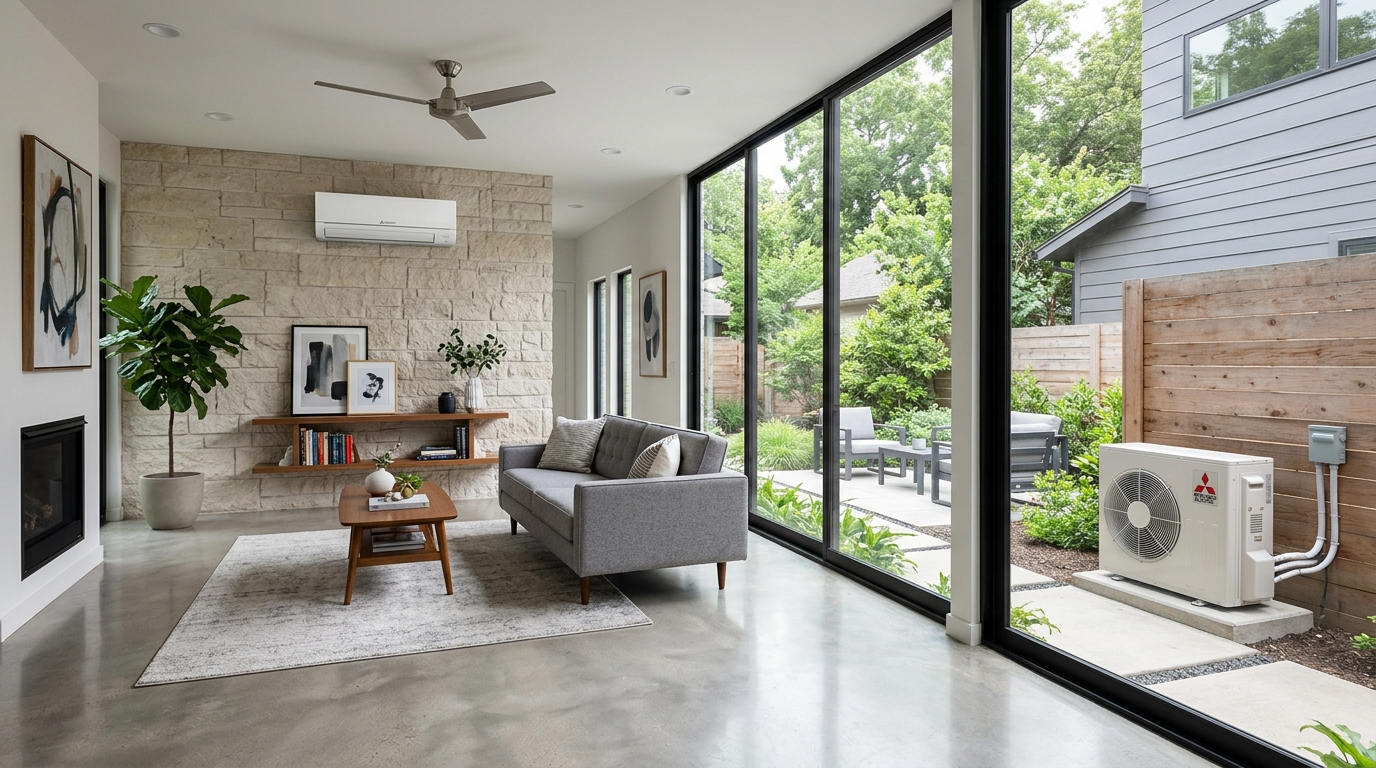
Heating and cooling technology has evolved considerably over the past decade, giving homeowners more options than ever before. One of the fastest-growing solutions is the ductless heat pump system, also known as a mini-split heat pump. These systems offer an energy-efficient alternative to traditional forced-air heating and cooling while providing greater flexibility for homes without existing ductwork.
Originally used primarily in homes where installing ducts was impractical, ductless systems have become increasingly common in new construction, home additions, renovated spaces, and even whole-house comfort solutions. Improvements in cold-climate technology have also made modern ductless heat pumps well suited for Michigan’s changing seasons.
Unlike conventional HVAC systems that rely on large duct networks to distribute conditioned air, ductless systems deliver heating and cooling directly to individual rooms or zones. This design reduces energy losses associated with ductwork while allowing homeowners to control temperatures independently in different parts of the home.
Many homeowners researching a modern ductless heat pump system are looking for improved comfort, lower utility bills, and greater control over indoor temperatures without major remodeling projects.
Quick Answer
A ductless heat pump system is a heating and cooling solution that transfers heat between indoor and outdoor units without using traditional ductwork. Also called mini-split systems, these units provide efficient year-round climate control, flexible zoning, quieter operation, and excellent energy performance for many Michigan homes.
Key Takeaways
- Ductless heat pumps provide both heating and cooling.
- No traditional ductwork is required.
- Individual rooms can have separate temperature settings.
- Modern cold-climate models perform well in Michigan.
- Energy losses from ductwork are eliminated.
- Installation is often less disruptive than central HVAC systems.
- Proper sizing and professional installation are essential.
- Regular maintenance helps maximize efficiency and equipment life.
What Is a Ductless Heat Pump?
A ductless heat pump is a type of HVAC system that transfers heat rather than generating it. The system consists of an outdoor condenser connected to one or more indoor air-handling units by small refrigerant lines that pass through an exterior wall.
Instead of distributing conditioned air through ducts, each indoor unit delivers heating or cooling directly into the room where it is installed.
This design allows homeowners to heat or cool only the areas being used, improving both comfort and energy efficiency.
Many homeowners choose a mini split ductless heat pump because it offers flexible installation options while reducing energy losses commonly associated with traditional duct systems.
How Does a Ductless Heat Pump Work?
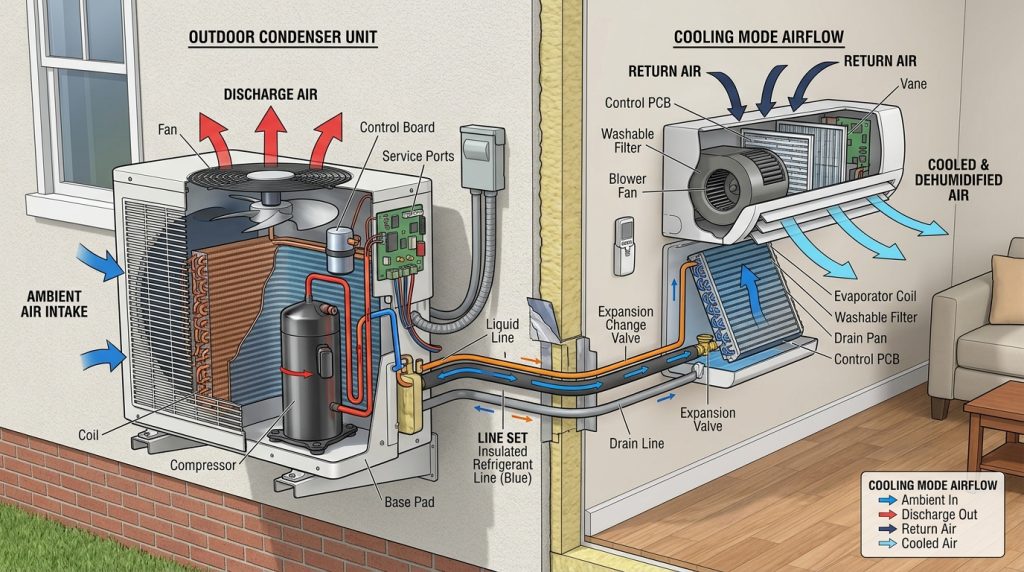
Like all heat pumps, ductless systems operate by moving heat rather than creating it.
During winter:
- The outdoor unit extracts heat from outside air.
- Refrigerant carries that heat indoors.
- Indoor units distribute warm air into individual rooms.
During summer:
- The process reverses.
- Indoor heat is transferred outside.
- The system provides efficient air conditioning.
Because heat transfer requires less energy than combustion heating, ductless systems often deliver excellent operating efficiency.
According to the U.S. Department of Energy, modern heat pump systems are among the most energy-efficient heating and cooling technologies currently available.
Main Components of a Ductless System
Although ductless systems eliminate ductwork, they still include several important components.
Outdoor Unit
The outdoor condenser houses:
- Compressor
- Condenser coil
- Fan
- Refrigerant controls
This unit transfers heat between the indoor environment and outdoor air.
Indoor Air Handler
Each indoor unit contains:
- Evaporator coil
- Quiet fan
- Air filter
- Temperature sensors
- Electronic controls
These wall-mounted or ceiling-mounted units condition the air for individual spaces.
Refrigerant Lines
Small insulated refrigerant lines connect the indoor and outdoor equipment.
These lines require only a small wall penetration, making installation considerably less invasive than installing new ductwork.
Benefits of Going Ductless
Several factors have contributed to the growing popularity of ductless heat pumps.
Improved Energy Efficiency
Traditional duct systems can lose conditioned air through leaks, poor insulation, or long duct runs.
Because ductless systems eliminate these losses, they often improve overall HVAC efficiency.
Many homeowners exploring ductless heat pump installation do so primarily to reduce long-term energy consumption while maintaining year-round comfort.
Flexible Installation
Ductless systems work particularly well for:
- Older homes without ducts
- Home additions
- Finished basements
- Garages
- Bonus rooms
- Sunrooms
- Detached offices
Since extensive duct installation is unnecessary, many projects can be completed with minimal structural modification.
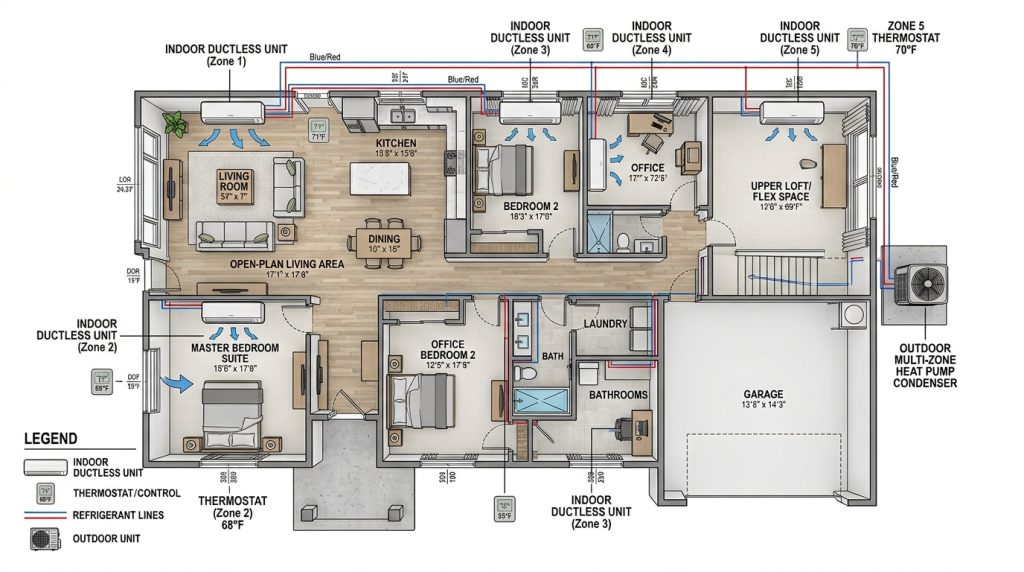
Zoned Comfort
Each indoor unit operates independently.
This allows homeowners to:
- Customize room temperatures
- Reduce unnecessary energy use
- Improve comfort throughout the home
- Accommodate different occupant preferences
Zoning remains one of the most significant advantages of ductless HVAC technology.
Are Ductless Heat Pumps Effective in Michigan?
One of the most common questions homeowners ask is whether ductless systems can handle Michigan winters.
Modern cold-climate ductless heat pumps have advanced significantly over the past decade.
Today’s systems often include:
- Variable-speed inverter compressors
- Enhanced refrigerants
- Advanced defrost technology
- Intelligent control systems
These improvements allow many ductless systems to continue providing efficient heating even when outdoor temperatures fall well below freezing.
For homes experiencing prolonged extreme cold, some homeowners combine ductless systems with supplemental heating or hybrid HVAC solutions depending on their comfort needs.
Where Ductless Heat Pump Systems Work Best
One of the biggest advantages of ductless technology is flexibility. Because these systems do not require extensive ductwork, they can be installed in a wide variety of residential applications.
Ductless systems are particularly well suited for:
- Older homes without existing ducts
- Room additions
- Finished basements
- Garages and workshops
- Attic conversions
- Home offices
- Sunrooms
- Guest suites
Many homeowners also use ductless systems to improve comfort in areas that traditional central HVAC systems struggle to heat or cool consistently.
Rather than conditioning the entire home equally, ductless units allow specific spaces to receive the heating or cooling they need.
What to Expect During Installation
Compared with installing a traditional forced-air system, ductless installations are often less invasive.
Most projects involve:
- Selecting indoor unit locations
- Installing the outdoor condenser
- Routing refrigerant lines
- Connecting electrical components
- Vacuum testing refrigerant lines
- System startup and calibration
Because large duct systems are unnecessary, installation can often be completed more quickly while minimizing disruption to the home.
Homeowners considering ductless heat pump installation should work with experienced HVAC professionals who can properly size equipment and determine optimal indoor unit placement.
Why Proper Sizing Matters
An undersized system may struggle during periods of high demand, while an oversized system may cycle too frequently, reducing efficiency and comfort.
Professional load calculations evaluate:
- Home size
- Insulation levels
- Window performance
- Room orientation
- Occupancy patterns
- Local climate
Accurate sizing helps maximize long-term performance.
Maintaining a Ductless Heat Pump
Routine maintenance helps keep ductless systems operating efficiently while extending equipment lifespan.
Recommended maintenance includes:
- Cleaning indoor air filters
- Inspecting outdoor equipment
- Checking refrigerant levels
- Cleaning coils
- Verifying electrical connections
- Testing system controls
Although homeowners can perform basic filter cleaning, annual professional inspections remain important for identifying developing issues before they become expensive repairs.
Many homeowners schedule regular maintenance alongside professional ductless heat pump installation providers to protect their long-term investment.
Common Misconceptions About Ductless Systems
As ductless technology becomes more popular, several misconceptions continue to circulate.
“Ductless Systems Only Work in Warm Climates”
This was once a reasonable concern, but today’s cold-climate models are specifically engineered for northern regions like Michigan.
Modern inverter technology allows many systems to continue operating efficiently during freezing temperatures.
“Ductless Systems Can Only Heat One Room”
While single-zone systems serve one space, multi-zone systems can connect several indoor units to one outdoor condenser.
This allows homeowners to condition multiple rooms independently.
“Ductless Systems Are Difficult to Maintain”
Routine maintenance is generally straightforward.
Most homeowners simply clean filters regularly while scheduling professional inspections to maintain peak efficiency.
Energy Efficiency and Long-Term Savings
Because ductless systems eliminate duct losses, they often provide higher overall efficiency than traditional forced-air systems.
Additional efficiency features commonly include:
- Variable-speed compressors
- Inverter technology
- Programmable controls
- Zoned heating and cooling
- Occupancy-based operation
Many homeowners choose ductless systems specifically to reduce unnecessary energy consumption while improving year-round comfort.
The U.S. Environmental Protection Agency recognizes ENERGY STAR certified heat pumps as high-efficiency HVAC solutions capable of reducing energy use when properly installed and maintained.
Choosing the Right HVAC Professional
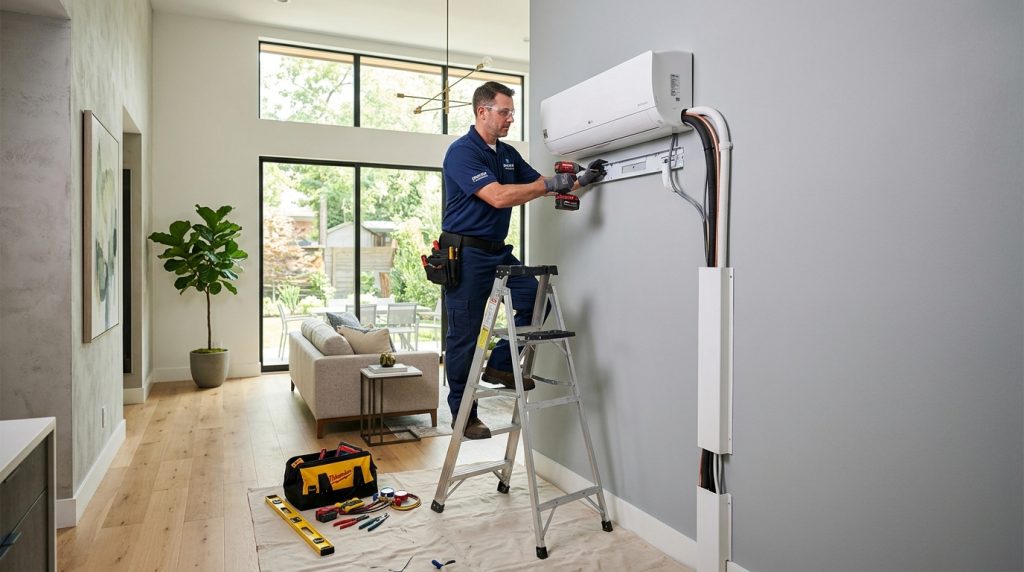
The quality of installation has a major influence on how well a ductless system performs.
Proper placement, refrigerant charging, airflow adjustment, and equipment sizing all affect long-term comfort and efficiency.
When evaluating contractors for a ductless heat pump system, homeowners should consider:
- Experience with ductless technology
- Cold-climate installation expertise
- Licensing and certifications
- Warranty support
- Preventative maintenance programs
Many homeowners also review public business profiles to better understand customer experiences, responsiveness, and overall service quality before selecting an HVAC contractor.
Following recognized indoor air quality best practices alongside professional HVAC maintenance can further improve comfort and support healthier indoor environments.
Conclusion
Ductless heat pump systems have become one of the most versatile heating and cooling solutions available for today’s homeowners. By eliminating the need for traditional ductwork, these systems offer flexible installation options, room-by-room temperature control, impressive energy efficiency, and year-round comfort.
Advances in cold-climate technology have made modern ductless heat pumps increasingly practical for Michigan homes, even during colder winter conditions. Whether improving comfort in a single room, adding climate control to a new addition, or replacing older HVAC equipment, ductless systems provide an efficient alternative that can adapt to a wide range of residential applications.
As with any HVAC investment, proper system sizing, professional installation, and routine maintenance remain essential for achieving reliable long-term performance and maximizing energy savings.
Frequently Asked Questions
What is a ductless heat pump system?
A ductless heat pump system is a heating and cooling solution that transfers heat between an outdoor unit and one or more indoor air handlers without using traditional ductwork. These systems provide efficient year-round comfort while allowing individual temperature control in different rooms.
Is a ductless heat pump the same as a mini-split?
Yes. The terms ductless heat pump and mini-split heat pump are commonly used interchangeably. Many homeowners researching a mini split ductless heat pump are referring to the same type of HVAC system.
Do ductless heat pumps work during Michigan winters?
Yes. Modern cold-climate ductless heat pumps are specifically designed to perform efficiently in colder climates. Many systems continue operating effectively well below freezing, making them suitable for many Michigan homes.
Can a ductless heat pump cool my home during summer?
Yes. A ductless heat pump provides both heating and cooling. During warmer months, the system reverses its operation and functions similarly to a high-efficiency air conditioner.
Where are ductless heat pumps most commonly installed?
Ductless systems are frequently installed in:
- Older homes without ducts
- Room additions
- Finished basements
- Garages
- Home offices
- Sunrooms
- Attic conversions
- Detached buildings
Is ductless heat pump installation disruptive?
Compared to installing traditional ductwork, ductless heat pump installation is generally less invasive. Most systems require only a small wall opening for refrigerant lines and electrical connections.
How energy efficient are ductless heat pumps?
Ductless systems are often highly efficient because they eliminate energy losses associated with ductwork. Variable-speed compressors and zoning capabilities further improve overall efficiency.
How often should a ductless heat pump be serviced?
Most manufacturers recommend professional maintenance at least once each year. Regular filter cleaning by homeowners and routine inspections by HVAC professionals help maintain system performance.
Can one outdoor unit serve multiple rooms?
Yes. Multi-zone systems allow one outdoor condenser to connect with several indoor units, giving homeowners independent temperature control for multiple rooms.
How long does a ductless heat pump last?
Many ductless heat pumps provide reliable service for 12 to 20 years when properly installed and maintained. Equipment quality, usage patterns, and preventative maintenance all influence lifespan.
What should homeowners consider before purchasing a ductless system?
Important considerations include:
- Home layout
- Number of rooms
- Insulation quality
- Heating and cooling requirements
- Equipment sizing
- Installation quality
- Long-term energy goals
A professional evaluation can help determine whether a ductless solution is appropriate.
Why is professional installation important?
A properly installed ductless heat pump system is more likely to deliver efficient performance, consistent comfort, and long-term reliability. Correct equipment sizing, refrigerant charging, and indoor unit placement all contribute to optimal operation.