Regular-length scrub pants are designed around a manufacturer’s standard lower-body proportions, but the word “regular” does not guarantee the correct fit for every healthcare professional of average height. The right pair should match the wearer’s inseam, rise, hip and thigh proportions, knee position, leg shape, and work footwear.
A regular-length pant fits correctly when the waistband stays secure, the rise allows comfortable sitting and bending, the knees align naturally, and the hem or cuff reaches its intended position without dragging or excessive bunching.
Quick Answer
Regular-length scrub pants may be the right choice when:
- The manufacturer’s standard inseam matches the wearer’s leg length
- The rise feels comfortable while standing and sitting
- Knee placement aligns naturally
- Cargo pockets sit correctly on the thigh
- The pant does not bunch excessively behind the knees
- Straight or flare hems remain clear of the floor
- Jogger cuffs sit comfortably near the ankle
- The waistband stays secure after pockets are loaded
- The leg shape suits the wearer’s thighs and calves
Do not choose regular length based only on height. Compare the actual inseam and other garment measurements with a pair of work pants that already fits well.
What Are Regular-Length Scrub Pants?
Regular length scrub pants use the standard inseam and vertical proportions established for a particular scrub style or collection.
They generally fall between shorter options such as petite or short and longer options such as tall.
However, “regular” is a sizing category, not one universal measurement.
A regular inseam may vary between:
- Brands
- Collections
- Women’s and men’s styles
- Joggers and straight-leg pants
- Contemporary and classic fits
Two pants labeled regular can therefore have different finished lengths.
Regular Length May Affect More Than the Hem
The overall fit can also be influenced by:
- Rise
- Knee position
- Cargo pocket placement
- Taper
- Leg opening
- Waistband height
This is why shoppers should evaluate the complete garment instead of checking only where the hem falls.
Who Usually Fits Regular-Length Scrub Pants?
Regular sizing is generally intended for wearers whose proportions align reasonably well with the manufacturer’s standard pattern.
A wearer may be a good candidate when regular pants:
- Sit correctly at the waist
- Fit comfortably through the rise
- Place the knee correctly
- Reach an appropriate point near the shoe
- Avoid excessive fabric stacking
- Keep pockets in practical locations
Height can provide a starting clue, but it should not make the final decision.
Two people of the same height can have different torso-to-leg proportions and need different inseams.
Why Is Inseam More Useful Than Height?
Inseam measures the inside length of the leg from the crotch seam toward the hem.
It directly relates to pant length, making it more useful than overall height when selecting scrub pants.
For example, two healthcare professionals may both be 5 feet 6 inches tall.
One could have:
- A longer torso
- Shorter legs
The other could have:
- A shorter torso
- Longer legs
The first may need short-length pants while the second may fit regular or even tall pants.
Apparel sizing relies on multiple body dimensions rather than height alone, so the actual garment measurements remain the more useful fitting guide.
How Do You Measure Scrub Pant Inseam?
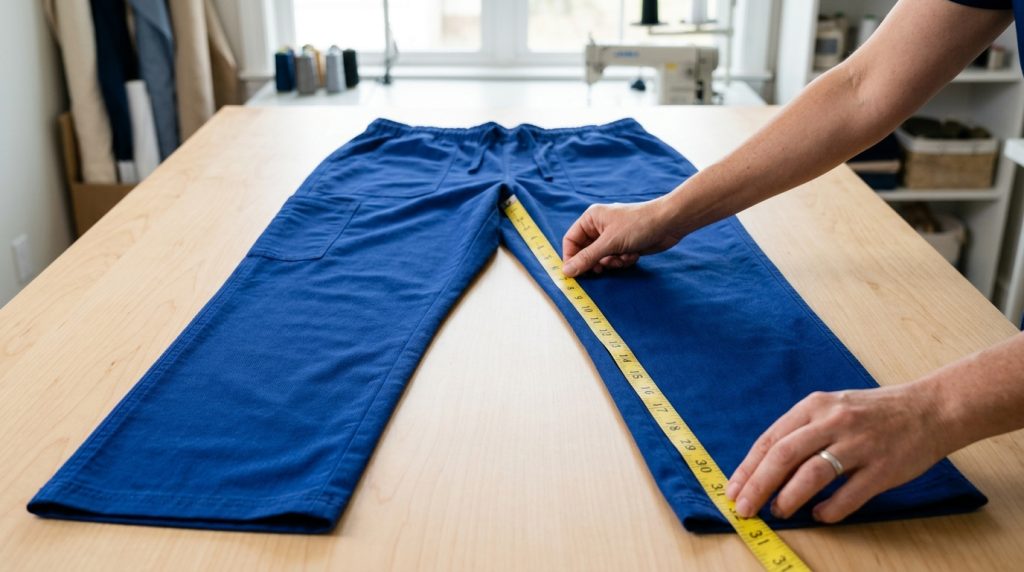
One of the easiest methods is to measure a pair of work pants that already fits correctly.
Step 1: Choose a Good Reference Pair
Select pants that:
- Sit at the preferred waist position
- Have a comfortable rise
- Work with normal work shoes
- End at the preferred length
Ideally, use a pant style similar to the new scrub pants.
For example, compare a straight-leg pant with another straight-leg style rather than using a cropped jogger as the reference for a flare pant.
Step 2: Lay the Pants Flat
Place the garment on a flat surface.
Smooth the leg without stretching the material.
Step 3: Locate the Crotch Seam
Find the point where the inner-leg seams meet.
Step 4: Measure Down the Inner Leg
Run the measuring tape from the crotch seam to the bottom of the hem.
Record the measurement.
Step 5: Compare With the Product Chart
Check whether the regular-length version of the scrub pants is close to that measurement.
A small difference may be acceptable depending on:
- Pant style
- Footwear
- Rise
- Preferred break at the shoe
- Whether the fabric shrinks under approved care
Is Regular Length the Same in Every Scrub Brand?
No.
Sizing terminology is not perfectly standardized across scrub manufacturers.
One collection’s regular inseam may differ from another collection’s.
The difference can also appear between styles within the same brand.
For example:
- A regular jogger may have one inseam.
- A regular straight-leg pant may have another.
- A regular flare style may intentionally be longer.
This is why shoppers should review the measurements for the specific garment rather than memorizing one “regular inseam.”
How Should Regular Scrub Pants Fit at the Waist?
Pant length cannot be evaluated accurately unless the waistband is sitting at its intended position.
If the waistband slides downward, the pants effectively become longer.
If it is pulled unusually high, they may appear shorter.
Common scrub waistbands include:
- Full elastic
- Drawstring
- Elastic and drawstring
- Wide knit waistband
- Yoga-style waistband
- Flat-front waistband
A Correctly Fitted Waistband Should:
- Remain secure while walking
- Avoid rolling
- Remain comfortable while sitting
- Avoid digging into the waist
- Stay stable when pockets contain normal lightweight items
- Return to position after bending
A Loose Waistband Can Affect Length
If the waistband drops lower during the shift:
- The crotch drops
- Knee placement moves downward
- Hem length increases
- Pockets sit lower
- Fabric may begin bunching
Before concluding that regular scrub pants are too long, check whether they are simply sitting too low.
How Does Rise Affect Regular-Length Scrub Pants?
Rise describes how the pants fit vertically between the waistband and crotch.
It strongly affects how the rest of the garment sits.
Common descriptions include:
- Low rise
- Mid rise
- Natural rise
- High rise
These terms also vary between manufacturers.
What Happens When the Rise Is Too Long?
An excessively long rise may cause:
- Crotch sagging
- Loose seat fabric
- Bunching below the waistband
- Low pocket placement
- Pant legs appearing longer
- Knee shaping falling below the actual knee
What Happens When the Rise Is Too Short?
A short rise may create:
- Pulling while sitting
- Tightness through the crotch
- Reduced back coverage
- Waistband movement while bending
- Pressure through the hips
Neither problem can be fixed simply by changing the inseam.
How Can You Test Pant Rise?
Wear the pants with normal work underlayers.
Then:
- Stand naturally.
- Sit fully in a chair.
- Lean slightly forward.
- Stand again.
- Bend at the hips and knees.
- Raise one knee.
- Walk several steps.
The rise should remain comfortable without significant pulling or sagging.
If the rise is wrong, a different pant cut may fit better even if the regular inseam is correct.
Why Does Knee Placement Matter?
The knee is an important proportional point in scrub pants.
Its position is particularly noticeable in:
- Joggers
- Tapered pants
- Cargo pants
- Flare pants
- Articulated styles
- Pants with decorative or functional knee seams
If the garment’s shaping sits too low or too high relative to the actual knee, movement may feel awkward.
Knee Placement That Is Too Low
Possible signs include:
- Persistent bunching behind the knee
- Taper beginning too low
- Cargo pockets sitting close to the knee joint
- Excess fabric in the lower thigh
- Flare beginning below its intended point
Knee Placement That Is Too High
Possible signs include:
- Pulling during knee flexion
- Lower leg appearing disproportionately long
- Seams tightening during walking
- Pant shaping sitting above the natural joint
If regular length consistently places these features incorrectly, another length category or style may be more appropriate.
How Does Leg Shape Change the Correct Regular Inseam?

Different pant silhouettes are intended to fall differently around the ankle and shoe.
The same wearer may therefore prefer different inseams depending on the style.
How Should Regular-Length Jogger Scrub Pants Fit?
Joggers narrow toward the ankle and usually end in a fitted cuff.
The cuff should typically sit around the ankle rather than falling over the shoe.
Correct Regular Jogger Fit
Look for:
- Minimal excess stacking above the cuff
- Comfortable calf room
- A cuff that does not dig in
- Proper knee alignment
- Enough rise for seated movement
- No excessive pulling through the thighs
Joggers That Are Too Long
They may:
- Stack heavily above the cuff
- Bunch behind the knee
- Look loose through the lower leg
- Push the cuff lower than intended
Joggers That Are Too Short
They may:
- Sit unusually high above the ankle
- Rise significantly while sitting
- Pull through the lower leg
- Feel short through the rise
Joggers should therefore be evaluated using both inseam and cuff position.
How Should Regular-Length Tapered Scrub Pants Fit?
Tapered pants gradually narrow toward the ankle but usually use a conventional hem.
A proper fit should:
- Allow comfortable thigh movement
- Narrow gradually
- Avoid gripping the calf
- End neatly near the shoe
- Avoid heavy fabric stacking
Tapered pants are often a useful middle ground between joggers and straight-leg scrubs.
Signs the Regular Taper Is Too Long
- Fabric folds around the ankle
- Tapering appears too low
- Knee area bunches
- Lower leg looks disproportionate
Signs the Taper Is Too Tight
- Calf movement feels restricted
- Pant leg catches on the calf
- Fabric rides upward during walking
- Lower-leg seams remain under tension
A different leg shape may be more effective than changing length.
How Should Regular-Length Straight-Leg Scrub Pants Fit?
Straight-leg pants maintain a relatively consistent width through the lower leg.
They provide a traditional silhouette and generally offer more calf room than joggers.
A Correct Straight-Leg Length Should:
- Fall naturally toward the shoe
- Remain clear of the floor
- Avoid folding beneath the heel
- Avoid excessive bunching around the ankle
- Move freely while walking
Straight-leg pants are especially sensitive to excessive inseam because there is no cuff to hold extra material above the ankle.
How Much Fabric Should Rest on the Shoe?
There is no universal amount, but a professional work pant should generally avoid heavy stacking.
The hem should fall cleanly without becoming a tripping or dragging concern.
How Should Regular-Length Cargo Scrub Pants Fit?
Cargo refers primarily to the pocket configuration rather than the leg shape.
Cargo scrub pants may also be:
- Straight
- Tapered
- Jogger
- Relaxed
In addition to inseam, check where the cargo pockets fall on the thigh.
Correct Cargo Pocket Placement
A functional thigh pocket should generally:
- Sit above the knee
- Remain easy to reach
- Avoid the main knee-bending point
- Stay comfortable while seated
- Remain stable while walking
When Regular-Length Cargo Pants Are Too Long Overall
The pocket may:
- Sit close to the knee
- Move across the bending area
- Become uncomfortable when sitting
- Make the pant appear disproportionate
This can indicate an overall length issue rather than simply an excessive hem.
How Should Regular-Length Flare Scrub Pants Fit?
Flare pants fit relatively close through the upper leg and widen below the knee.
Their correct fit depends on both knee placement and hem length.
Knee Position Matters
The flare should begin around the intended lower-leg area.
If the regular pattern is too long, the flare may begin too low.
Hem Length Matters Even More
A wide flare hem can easily:
- Drag
- Fold underneath the heel
- Contact the floor
- Become frayed
- Collect around shoes
Regular flare scrub pants should always be tested with normal work footwear.
If the hem contacts the floor, a shorter length or professional alteration may be needed.
How Do Wide-Leg Scrub Pants Fit in Regular Length?
Wide-leg scrub pants provide more room through much of the leg.
The additional fabric makes correct length particularly important.
Excessive length may result in:
- Fabric movement around footwear
- Hem dragging
- Bunching
- Greater contact with surrounding surfaces
The waistband, rise, and inseam should all be checked carefully.
A wide silhouette should provide intentional room without becoming excessively long.
Which Leg Shape Works Best for Different Fit Needs?
| Fit Priority | Scrub Pant Style to Consider | Main Reason |
| Minimal ankle fabric | Jogger | Fitted cuff controls lower-leg fabric |
| Streamlined shape | Tapered | Narrows without requiring a cuff |
| More storage | Cargo | Adds thigh-level pocket options |
| Traditional silhouette | Straight leg | Provides consistent lower-leg room |
| More room below knee | Flare | Widens through the lower leg |
| Relaxed lower-body fit | Wide leg | Provides additional overall leg room |
| Fuller calves | Straight or flare | Usually reduces calf restriction |
| Athletic footwear | Jogger or tapered | Creates a streamlined ankle area |
The table is a starting point. Individual proportions still determine the best fit.
How Should Scrub Pants Fit Through the Hips and Thighs?
Correct inseam cannot compensate for insufficient hip or thigh room.
Professionals comparing scrub pants for women should check the entire lower-body fit rather than choosing regular length only because the hem looks correct.
Signs the Pants Are Too Tight
Look for:
- Horizontal tension lines
- Front pockets pulling open
- Restricted seated movement
- Tightness through the thighs
- Side seams rotating
- Waistband being pulled downward
Signs the Pants Are Too Loose
Look for:
- Excess seat fabric
- Large folds around the thighs
- Pants rotating while walking
- Bunching behind the knees
- Pocket openings hanging away from the body
A different silhouette may fit better than changing size.
How Should Men Evaluate Regular Scrub Pant Fit?
Men should also evaluate proportions rather than assuming the regular men’s length will automatically fit.
When choosing scrub pants for men, important areas include:
- Waist
- Seat
- Rise
- Thigh
- Knee
- Calf
- Inseam
- Leg opening
Men’s Straight-Leg Scrubs
These may work well for professionals who prefer:
- More calf room
- Traditional styling
- Conventional hems
Men’s Joggers
Check:
- Thigh room
- Taper
- Calf width
- Ankle cuff
- Inseam
A jogger can fit correctly at the waist while still being too narrow through the calf.
Men’s Cargo Pants
Check whether stored items alter:
- Waistband position
- Leg balance
- Pocket shape
Heavy cargo pockets can make otherwise correctly sized pants sit lower and appear longer.
Does Body Shape Affect Regular-Length Fit?
Yes.
Length interacts with the wearer’s overall proportions.
Longer Torso and Shorter Legs
A person can be average or tall in overall height but need short-length pants.
Shorter Torso and Longer Legs
Someone of moderate height may need regular or tall pants.
Fuller Thighs
A slim regular pant may ride upward because the fabric catches around the thighs, making the hem appear shorter.
Fuller Calves
Narrow tapered or jogger pants may catch around the calves and alter where the lower leg sits.
Greater Waist-to-Hip Difference
A waistband that is too loose may allow the pants to drop lower, making a correct inseam appear too long.
Fit should be assessed as a connected system.
Can the Correct Inseam Still Look Too Long?
Yes.
Several other fit problems can make the pants appear longer.
Waistband Is Too Loose
The pants sit lower.
Rise Is Too Long
The crotch hangs lower, shifting the leg downward.
Pants Are Too Large
Excess fabric creates folds that resemble additional length.
Leg Shape Is Too Wide
More material accumulates near the shoe.
Pocket Weight Pulls the Pants Down
Heavy objects can alter waistband position.
Before changing to a shorter inseam, determine whether the pants are sitting where they were designed to sit.
Can the Correct Inseam Look Too Short?
Yes.
A pant can appear short when:
- Rise is too short
- Thighs are too tight
- Calves are too tight
- Jogger legs ride upward
- Waistband is pulled unusually high
- Fabric catches during movement
In these situations, moving to a longer inseam may not solve the underlying fit issue.
How Do Pockets Affect Regular-Length Scrub Pants?
Pocket placement and pocket weight can alter garment fit.
Common scrub-pant pockets include:
- Front slash pockets
- Cargo pockets
- Back pockets
- Zippered pockets
- Utility compartments
- Interior dividers
Heavy Pockets Can Change Pant Length
If pocket weight pulls the waistband downward, the pants may:
- Appear longer
- Bunch more
- Shift at the knees
- Drag near footwear
The solution may be to reduce or redistribute the load rather than change inseam.
Front Pockets
Front pockets should lie relatively flat.
If they pull open, the hip area may be too tight.
Back Pockets
Bulky objects can create discomfort while sitting.
Cargo Pockets
Cargo pockets provide useful storage but can create significant asymmetrical weight when overloaded.
Zippered Pockets
They can secure lightweight items, but zipper hardware should not press uncomfortably against the leg.
How Much Stretch Should Regular Scrub Pants Have?
Stretch can make regular-length pants easier to move in, but it does not determine the correct length.
Useful stretch can support:
- Sitting
- Bending
- Walking
- Climbing steps
- Raising the knee
Stretch Recovery Matters
Fabric should return toward its intended shape after movement.
Poor recovery may cause:
- Knee bagging
- Seat sagging
- Pocket distortion
- Waistband stretching
- Pants appearing longer later in the shift
A garment that fits properly in the morning but becomes loose by the end of the day may have a fabric recovery issue rather than an inseam problem.
What Fabric Features Affect Pant Fit?
Common fibers used in medical apparel include:
- Polyester
- Cotton
- Rayon or viscose
- Nylon
- Spandex or elastane
Fabric performance also depends on:
- Weight
- Construction
- Stretch direction
- Surface finish
- Recovery
- Garment design
A soft draping fabric may create different folds from a more structured material even when both pants have identical inseams.
What Is the Best Regular-Length Scrub Pant for Long Shifts?
There is no single best style.
For long work periods, prioritize:
- Stable waistband
- Appropriate rise
- Comfortable hip and thigh room
- Functional stretch
- Good recovery
- Proper knee placement
- Correct inseam
- Appropriate footwear clearance
- Balanced pocket storage
NIOSH provides dedicated training for nurses on shift work and long work hours, reflecting the demanding schedules that many healthcare workers may experience. Clothing cannot eliminate fatigue associated with long work hours, but properly fitted workwear can avoid introducing unnecessary restriction or repeated adjustment. (CDC)
Why Does Movement Testing Matter?
Registered nurses may spend substantial portions of their workday walking, bending, stretching, and standing, according to the U.S. Bureau of Labor Statistics. A scrub pant should therefore be assessed during movement rather than only in a standing fitting-room pose. BLS information on the registered nurse work environment provides additional context on these physical demands.
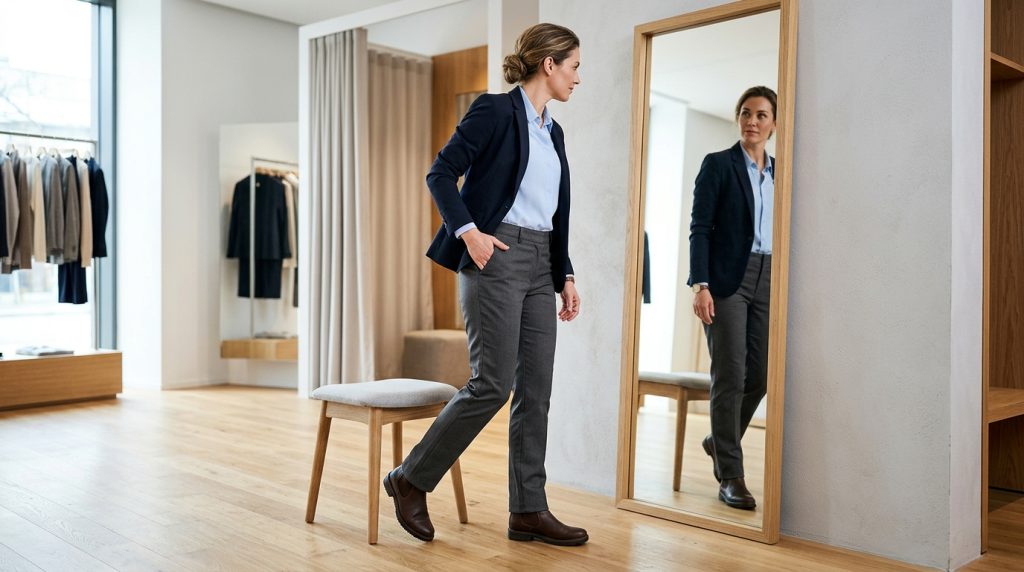
The Regular-Length Scrub Pant Test
Wear normal work underlayers and shoes.
Then:
- Stand naturally.
- Check waistband height.
- Locate the knee position.
- Check the hem or cuff.
- Sit fully in a chair.
- Stand without pulling the pants upward.
- Walk quickly.
- Bend at the knees and hips.
- Raise one knee.
- Take a longer step.
- Place normal lightweight items in the pockets.
- Recheck waistband and hem position.
After the Test, Ask:
- Did the waistband move?
- Did the rise pull?
- Did fabric gather behind the knees?
- Did the cuffs ride upward?
- Did the hem drag?
- Did pocket weight change the fit?
Healthcare professionals who want to compare regular, short, petite, and tall lengths before purchasing can use a medical scrub store in Lincoln for an in-person comparison of inseams, rises, and leg shapes.
How Should Regular Scrub Pants Work With Different Shoes?
Footwear can change the ideal appearance of a pant hem.
Athletic Work Shoes
Regular joggers, tapered pants, and straight-leg pants can all work with athletic footwear.
The correct length depends on how much of the shoe is intended to remain visible.
Clogs
Straight and tapered hems should fall cleanly without becoming trapped beneath the heel.
Slip-On Work Shoes
Check for excess fabric around the back of the shoe during walking.
Bulkier Footwear
Straight or subtle flare styles may provide more space around the upper shoe.
Regardless of footwear, scrub pants should avoid:
- Dragging
- Folding beneath the heel
- Catching on the shoe
- Excessive stacking
- Restricting ankle movement
Should Regular Scrub Pants Touch the Floor?
No.
Scrub pant hems should remain clear of the floor during normal standing and walking.
A hem that touches or drags may indicate:
- Excess inseam
- Loose waistband
- Excess rise
- Incorrect footwear pairing
- Overall oversizing
Straight-leg, flare, and wide-leg pants deserve particular attention because their wider hems are more likely to contact the floor when too long.
How Much Bunching Is Normal?
Some fabric folding is unavoidable during movement.
When a person sits or bends the knees, the pant leg must accommodate the changing joint position.
Normal Bunching
Temporary folds may appear:
- Behind the knee while sitting
- Around the hip crease
- Near a jogger cuff
These should relax substantially when the wearer stands.
Potential Fit Problem
Persistent bunching while standing may indicate:
- Excess inseam
- Incorrect knee placement
- Excess thigh fabric
- Tight calves pushing fabric upward
- Poor fabric recovery
- Incorrect taper
Do not automatically shorten the pants until the cause is identified.
Regular vs Short Scrub Pants: Which Should You Choose?
Short length may be a better option when regular pants fit correctly everywhere except the lower leg.
Consider Short Length If:
- Waistband fits
- Rise fits
- Hips fit
- Knee alignment is correct
- Pockets are positioned properly
- Only the hem is too long
If the knee, rise, and pocket positions are also too low, petite sizing may deserve consideration instead.
Regular vs Petite Scrub Pants
Petite sizing may adjust more of the garment’s vertical proportions.
Consider petite sizing when regular pants consistently show:
- Excessive rise
- Low knee placement
- Cargo pockets sitting too low
- Taper beginning too far down
- Excess fabric throughout the leg
The exact differences depend on the manufacturer.
Regular vs Tall Scrub Pants
Tall pants generally provide additional length and may sometimes include proportional changes to the rise or knee placement.
Consider tall sizing when regular pants:
- Finish substantially above the intended hem position
- Pull upward significantly while sitting
- Place knee shaping too high
- Feel short through several vertical areas
Again, check measurements rather than relying only on the tall designation.
When Is Hemming Regular Scrub Pants Appropriate?
Hemming can work well when everything above the lower leg fits correctly.
Consider alteration when:
- Waist fits
- Rise fits
- Hips and thighs fit
- Knee position is correct
- Pockets are properly placed
- Only the final hem is too long
Hemming Does Not Correct:
- Incorrect rise
- Low knee position
- Low cargo pockets
- Poor taper alignment
- Overall oversizing
If several areas are wrong, another length category may provide better proportions.
Are Joggers Easy to Hem?
Joggers can be more difficult to alter because the cuff is part of the pant design.
Significant shortening may require:
- Removing the cuff
- Shortening the leg
- Preserving the taper
- Reattaching the cuff
This is more complex than hemming a straight-leg pant.
Choosing the correct manufacturer-provided length is often preferable when available.
How Should Regular-Length Scrub Pants Be Bought Online?
Online shoppers should check more than the inseam.
Review:
- Waist measurement
- Hip measurement
- Rise
- Thigh fit
- Inseam
- Leg shape
- Leg opening
- Waistband construction
- Fabric composition
- Stretch
- Pocket placement
- Return policy
Compare With a Known Garment
Save measurements from a scrub pant that already fits correctly.
This creates a personal fit reference.
Do Not Assume the Same Regular Length Across Brands
Review each product separately.
Even if the same size and length worked previously, another collection may use different proportions.
Order One Pair First
When trying a new style:
- Order one pair.
- Keep tags attached.
- Test the fit at home.
- Wear normal work footwear.
- Check sitting and movement.
- Confirm pocket position.
- Approve the length before purchasing several pairs.
Why Should Scrub Pants Be Tested Before Washing?
Washing can alter garment condition and may affect return eligibility.
Before laundering, confirm:
- Waistband
- Rise
- Hip fit
- Knee position
- Inseam
- Pocket placement
- Leg shape
- Footwear compatibility
Once the fit is approved, follow the care label.
The Federal Trade Commission’s Care Labeling Rule requires covered apparel to provide care instructions to purchasers. (Federal Trade Commission)
Can Washing Change Scrub Pant Length?
Garment dimensions can change depending on fabric construction and care.
The best approach is to follow the manufacturer’s instructions rather than attempting to deliberately shrink pants into the correct length.
Improper care may affect:
- Inseam
- Waistband
- Stretch recovery
- Fabric texture
- Pocket shape
- Overall dimensions
A correct fit should be established before laundering whenever possible.
Common Regular-Length Scrub Pant Mistakes
Assuming Average Height Means Regular Length
Overall height does not determine inseam.
Assuming Every Regular Inseam Is the Same
Measurements differ across brands and styles.
Looking Only at the Hem
Rise, knees, and pockets also indicate whether the vertical proportions fit correctly.
Ignoring the Waistband
A loose waistband can make pants appear longer.
Choosing a Longer Pant Because the Thighs Feel Tight
The underlying issue may be the pant cut rather than inseam.
Choosing a Shorter Pant Because the Calves Bunch
Tight calves may push fabric upward or prevent it from falling naturally.
Ignoring Leg Shape
Joggers, tapered pants, straight legs, and flares are intended to fall differently.
Testing Without Work Shoes
Footwear affects the final hem position.
Overloading Pockets
Heavy pocket contents can pull the waistband down and change apparent length.
Buying Several Pairs Before Testing One
Fit differences become expensive when repeated across a complete work rotation.
Regular-Length Scrub Pant Fit Checklist
Waistband
- Stays at the intended waist position
- Does not roll
- Remains comfortable while sitting
- Supports normal lightweight pocket contents
Rise
- Crotch sits naturally
- No excessive sagging
- No pulling while seated
- Provides appropriate coverage during bending
Hips and Thighs
- Pockets lie relatively flat
- Sitting remains comfortable
- Walking stride is unrestricted
- Fabric is not under constant tension
Knees
- Knee shaping aligns naturally
- Bending is comfortable
- Excess fabric does not remain bunched while standing
Inseam
- Matches the intended pant style
- Works with normal footwear
- Does not create excessive stacking
- Keeps the hem clear of the floor
Lower Leg
- Jogger cuff is comfortable
- Taper does not restrict the calf
- Straight leg falls cleanly
- Flare does not drag
Pockets
- Cargo pockets sit above the knee
- Pocket contents remain accessible
- Added weight does not pull the waistband downward
Conclusion
Regular-length scrub pants fit correctly only when the entire garment is proportioned appropriately from waistband to hem.
The regular label alone does not determine whether a pair will fit.
Healthcare professionals should evaluate:
- Waistband
- Rise
- Hips
- Thighs
- Knee placement
- Inseam
- Leg shape
- Pockets
- Footwear
A straight-leg pant needs a different hem relationship than a jogger. A flare requires careful floor clearance. A tapered pant needs correct calf and knee alignment. Cargo pants add another consideration through pocket positioning.
The simplest fitting rule is to look beyond the ankle.
If the waistband, rise, knees, pockets, and hem all sit naturally, regular length is probably doing its job. If several of those areas are too high or too low, another length category or pant cut may provide better proportions.
Frequently Asked Questions
What does regular length mean in scrub pants?
Regular length generally refers to the manufacturer’s standard inseam and proportions for a scrub pant. The exact measurement varies by brand, collection, gender category, and pant style, so shoppers should check the product-specific size chart.
What inseam is considered regular for scrub pants?
There is no universal regular scrub-pant inseam. Manufacturers and individual styles may use different measurements. The best approach is to measure a well-fitting pair of pants and compare that number with the specific product.
Should regular scrub pants touch the floor?
No. Straight-leg, flare, and other conventional hems should remain clear of the floor. Joggers typically finish near the ankle. The correct length should be checked while wearing normal work shoes.
How do I know if regular scrub pants are too long?
Signs include persistent fabric stacking, hems dragging, jogger fabric bunching above the cuff, knee shaping sitting too low, or cargo pockets falling unusually close to the knee.
Why do regular scrub pants bunch behind the knees?
Possible causes include excess inseam, incorrect knee placement, loose thigh fit, tight calves, misaligned taper, or poor fabric recovery. If bunching remains while standing, the pant’s proportions or cut may need adjustment.
Should I choose regular or short scrub pants?
Choose short length when regular pants fit correctly through the waist, rise, hips, knees, and pockets but provide too much lower-leg length. If several vertical proportions are also too long, petite sizing may be worth comparing.
Can someone who is short wear regular-length scrub pants?
Yes. A shorter person may have relatively long legs and fit a regular inseam correctly. Height does not determine pant length by itself.
Can someone who is tall wear regular scrub pants?
Yes. A taller person with a longer torso and standard or shorter leg proportions may fit regular-length pants. Actual inseam and garment proportions are more important than total height.