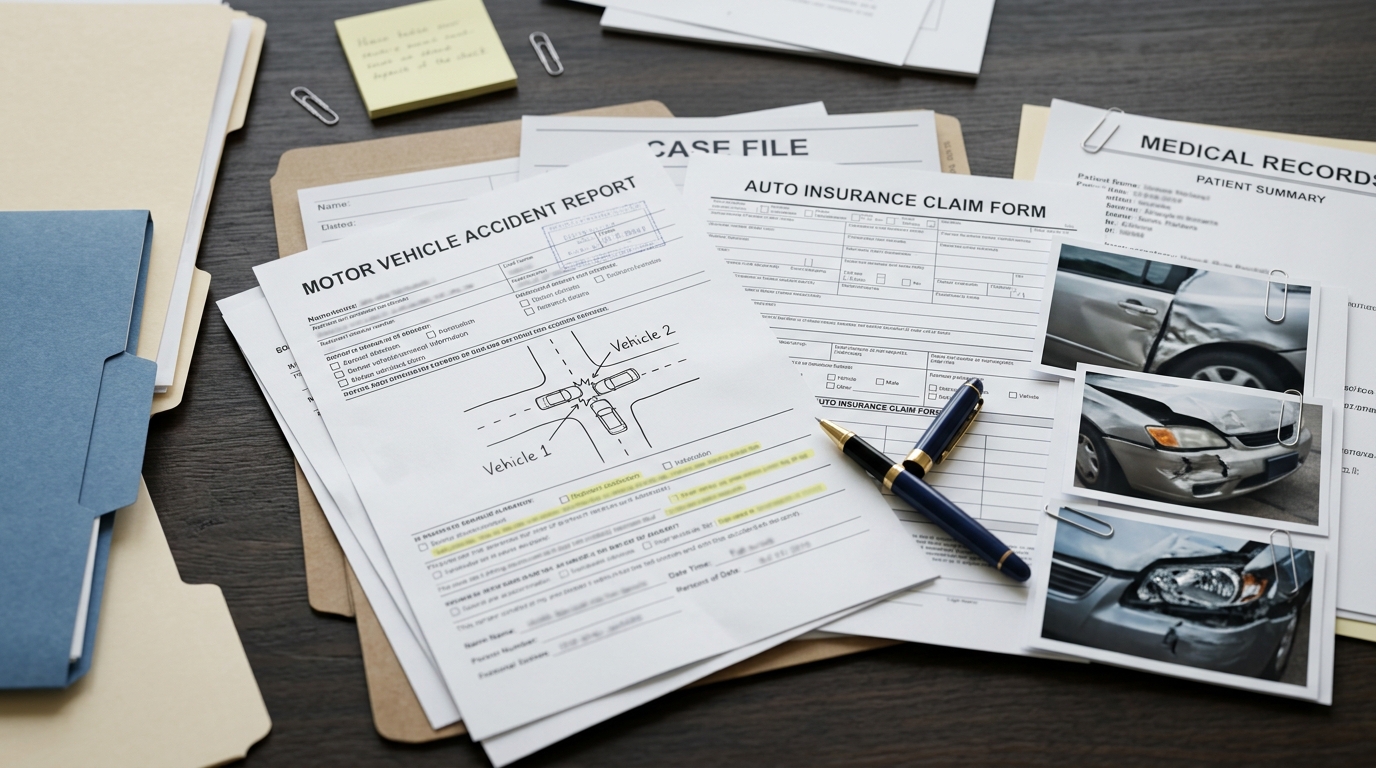
Multi-vehicle accident claims in New York can become complicated because more than one driver, vehicle owner, employer, insurer, or other party may be involved. These crashes may include chain-reaction rear-end collisions, intersection crashes, highway pileups, commercial vehicle crashes, rideshare accidents, and crashes involving uninsured or underinsured drivers. A car accident attorney resource can help explain how liability, no-fault benefits, comparative fault, medical records, and insurance coverage are generally evaluated after a crash.
Quick Answer
A multi-vehicle accident claim in New York usually requires identifying every driver involved, determining how the crash sequence happened, reviewing each insurance policy, and preserving evidence before it disappears. Fault may be shared among multiple drivers. No-fault benefits may help cover certain economic losses, while a bodily injury claim may require proof of serious injury. Important evidence may include police reports, DMV reports, vehicle damage photos, witness statements, dashcam footage, traffic camera video, medical records, insurance letters, and expert review when the crash sequence is disputed.
Key Takeaways
- Multi-vehicle accident claims often involve more than one potential at-fault party.
- New York Vehicle and Traffic Law § 1129 requires drivers not to follow another vehicle more closely than is reasonable and prudent, considering speed, traffic, and roadway conditions. NYSenate.gov
- New York DMV’s MV-104 form states that crashes involving injury, death, or more than $1,000 in property damage to any one person must be reported within 10 days. NY DMV
- New York no-fault written notice generally must be submitted as soon as reasonably practicable, but no more than 30 days after the accident unless a clear and reasonable justification exists for late notice. Department of Financial Services
- New York CPLR § 1411 addresses comparative fault and explains that damages may be reduced in proportion to the claimant’s share of culpable conduct, subject to specific rules. NYSenate.gov
- New York Courts lists three years for car accident claims and many negligence-based personal injury claims, but shorter insurance, no-fault, municipal, or policy deadlines may also apply. New York Courts
- A multi-vehicle claim should review every possible insurance source, not only the first driver who appears responsible.
What Is a Multi-Vehicle Accident?
A multi-vehicle accident involves three or more vehicles, though some claims involving two vehicles and multiple responsible parties can also become complex. These crashes often happen when one impact triggers another, when vehicles react to traffic hazards, or when several drivers make unsafe decisions close together.
Multi-vehicle accidents may include:
- Chain-reaction rear-end crashes
- Highway pileups
- Intersection collisions
- Truck crashes involving several vehicles
- Rideshare or delivery vehicle crashes
- Work zone crashes
- Bad-weather crashes
- Lane-change collisions
- Crashes involving disabled vehicles
- Accidents involving pedestrians, bicyclists, or motorcyclists near traffic
- Crashes involving uninsured or hit-and-run drivers
The main challenge is determining who caused which impact and which injuries came from which part of the crash.
Why Multi-Vehicle Accident Claims Are More Complicated
A two-car crash may involve one injured person and one at-fault driver. A multi-vehicle crash may involve several drivers, multiple impact points, competing statements, different insurance companies, and several people making claims against limited coverage.
These claims can become complicated because of:
- Conflicting driver statements
- Multiple insurance adjusters
- Several possible at-fault drivers
- Disputed crash sequence
- Shared fault arguments
- Multiple injured people
- Limited policy limits
- Commercial vehicle involvement
- Rideshare or delivery app issues
- Uninsured or underinsured drivers
- Different no-fault insurers
- Disputed medical causation
- Delayed or incomplete police reports
A broader guide to multiple defendant injury claims can help explain why identifying every responsible party matters when more than one person or entity may have contributed to the injury.
Chain-Reaction Rear-End Accidents
Chain-reaction crashes are among the most common multi-vehicle accident scenarios. One vehicle may strike another and push it into a third vehicle. In other cases, several vehicles may collide separately because drivers were following too closely or unable to stop in traffic.
Chain-reaction questions may include:
- Which vehicle caused the first impact?
- Was the injured person hit once or more than once?
- Did one vehicle push another vehicle forward?
- Were any vehicles already stopped?
- Was any driver following too closely?
- Were brake lights working?
- Was traffic stopping normally?
- Did weather affect stopping distance?
- Was a commercial truck involved?
- Was any driver distracted?
Vehicle and Traffic Law § 1129 may be relevant when a driver is accused of following too closely. The statute requires drivers to maintain a reasonable and prudent distance based on speed, traffic, and roadway conditions. NYSenate.gov
Intersection Multi-Vehicle Accidents
Intersection crashes can involve several vehicles when one driver runs a red light, fails to yield, turns left across traffic, stops suddenly, or causes another vehicle to swerve. These crashes may involve side impacts, rear impacts, pedestrian injuries, and secondary collisions.
Intersection crash evidence may include:
- Traffic signal timing
- Stop sign or yield sign location
- Driver direction of travel
- Vehicle damage patterns
- Witness statements
- Dashcam footage
- Traffic camera footage
- Nearby business surveillance footage
- Police report diagrams
- Roadway markings
- Cell phone records, when relevant
When several vehicles enter or approach an intersection at nearly the same time, the claim may require careful reconstruction of the crash sequence.
Highway Pileup Claims
Highway pileups may involve many vehicles, high speeds, poor weather, limited visibility, sudden braking, distracted driving, or disabled vehicles. These crashes can create serious injuries and complex insurance disputes.
Highway pileup issues may include:
- Traffic speed before the crash
- Weather and visibility
- Following distance
- Emergency braking
- Vehicle positions
- Roadway debris
- Commercial vehicle involvement
- Dashcam footage
- Police investigation details
- Multiple injured people
- Limited insurance coverage
- Claims against several drivers
In a pileup, one driver may not be responsible for every impact. The exact order of collisions may become central to the claim.
Commercial Vehicles in Multi-Vehicle Crashes
When a truck, delivery van, bus, taxi, rideshare vehicle, or company vehicle is involved, the claim may include business insurance and company-held evidence. A commercial vehicle crash should not be evaluated only through the driver’s statement or police report.
Commercial vehicle evidence may include:
- Driver qualification file
- Employer information
- Dispatch records
- Delivery records
- GPS data
- Dashcam footage
- Electronic logging records
- Maintenance records
- Inspection records
- Company safety policies
- Cargo information
- Commercial insurance policies
- Excess or umbrella policies
Commercial vehicle evidence may be lost, overwritten, or difficult to obtain without early preservation efforts.
Rideshare and Delivery Vehicle Issues
Multi-vehicle accidents involving rideshare or app-based delivery drivers may involve additional insurance questions. Coverage may depend on whether the driver was offline, logged into the app, waiting for a request, traveling to pick up a passenger, transporting a passenger, or making a delivery.
Important questions may include:
- Was the app active?
- Was a ride or delivery accepted?
- Was a passenger in the vehicle?
- Was the driver between trips?
- Was the driver using a personal vehicle for work?
- Did personal insurance exclude commercial activity?
- Did app-based coverage apply?
- Were multiple vehicles responsible?
- Was SUM coverage available?
- Were app records preserved?
Trip records, location data, and insurance documents may be important in these claims.
How Fault Is Determined in a Multi-Vehicle Accident
Fault is usually determined by reviewing the conduct of every driver and comparing it with the available evidence. One driver may be fully responsible, or several drivers may share fault.
Fault review may involve:
- Speed
- Following distance
- Lane changes
- Failure to yield
- Red-light or stop-sign violations
- Distracted driving
- Impaired driving
- Weather-related driving decisions
- Brake-light or vehicle defect issues
- Sudden stops
- Commercial driver conduct
- Work zone conditions
- Roadway hazards
The insurance companies may not agree with each other. Each insurer may try to shift responsibility to another driver.
Comparative Fault in New York
Comparative fault can be important in multi-vehicle claims. New York CPLR § 1411 generally provides that culpable conduct attributable to the claimant does not automatically bar recovery, but damages may be reduced in proportion to the claimant’s share of fault, subject to specific rules. NYSenate.gov
Comparative fault may be argued when:
- The injured driver was speeding.
- The injured driver followed too closely.
- The injured driver changed lanes unsafely.
- The injured driver stopped suddenly.
- The injured driver failed to avoid a hazard.
- The injured driver drove too fast for weather.
- The injured driver was distracted.
- Several drivers contributed to the crash.
Even when the injured person may share some fault, the claim may still have value depending on the facts and the applicable rules.
Multiple Defendants and Liability Allocation
A multi-vehicle claim may involve several defendants. Each defendant may argue that another party caused the crash. This makes liability allocation important.
Potential defendants may include:
- A negligent driver
- A vehicle owner
- An employer
- A trucking company
- A rideshare or delivery company
- A maintenance company
- A vehicle rental company
- A government entity responsible for roadway conditions
- A contractor working near the roadway
- A manufacturer, in rare defect-related cases
A claim involving multiple defendants may require more evidence, more insurance review, and more careful settlement planning than a single-driver claim.
No-Fault Benefits After a Multi-Vehicle Accident
New York no-fault benefits may cover certain economic losses after many motor vehicle accidents, regardless of who caused the crash. These benefits can help with medical bills, lost earnings, and certain other reasonable and necessary expenses.
New York DFS guidance explains that written no-fault notice must generally be submitted as soon as reasonably practicable, but no more than 30 days after the accident unless the injured person provides written proof of a clear and reasonable justification for late notice. Department of Financial Services
No-fault benefits may cover:
- Emergency care
- Hospital treatment
- Doctor visits
- Diagnostic testing
- Physical therapy
- Chiropractic treatment
- Prescription costs
- Lost earnings
- Transportation to medical visits
- Certain other covered expenses
A broader guide to the New York no-fault insurance system can help explain how first-party benefits, medical bill submissions, wage claims, and insurance deadlines may work after a crash.
Which No-Fault Insurer Applies?
In a multi-vehicle crash, determining the correct no-fault insurer can be confusing. The answer may depend on whether the injured person was a driver, passenger, pedestrian, bicyclist, or motorcyclist, and which vehicle they occupied or were struck by.
Possible no-fault sources may include:
- The vehicle occupied by the injured person
- The injured person’s own auto policy
- A household auto policy
- The vehicle that struck a pedestrian or bicyclist
- A commercial vehicle policy
- MVAIC, when no applicable insurance exists and eligibility rules are met
The no-fault source should be identified quickly because notice deadlines can apply even while fault is still being investigated.
Pain and Suffering Claims After Multi-Vehicle Crashes
No-fault benefits generally do not pay pain and suffering. In many New York motor vehicle injury claims, a person seeking pain and suffering damages must show a serious injury under New York Insurance Law.
Serious injury evidence may include:
- Fracture records
- MRI or CT reports
- Surgery records
- Specialist evaluations
- Range-of-motion findings
- Therapy records
- Permanent limitation opinions
- Significant limitation documentation
- Scarring photos
- Work restriction notes
- Disability records
In a multi-vehicle crash, the injured person may also need to show which impact caused or contributed to the injury.
Evidence Needed in a Multi-Vehicle Accident Claim
Evidence is especially important in multi-vehicle crashes because several drivers may blame each other. A broader guide to evidence for personal injury claims can help explain why photos, reports, records, witness information, and medical documentation often need to support the same timeline.
Useful evidence may include:
- Police report
- DMV MV-104 report
- Scene photos
- Vehicle damage photos
- Photos of vehicle resting positions
- Dashcam footage
- Traffic camera footage
- Business surveillance footage
- Witness names
- Driver statements
- Insurance information for every vehicle
- Medical records
- Medical bills
- Repair estimates
- Total loss documents
- Work restriction notes
- Lost wage records
- No-fault forms
- Insurance letters
The more vehicles involved, the more important it becomes to preserve evidence early.
Police Reports and DMV Reports
Police reports are important because they may document every vehicle, driver, passenger, insurance company, injury notation, witness, statement, and crash diagram. In a multi-vehicle crash, the report may also include separate vehicle units and contributing factors.
New York DMV’s MV-104 form states that a crash in New York must be reported within 10 days when it causes a fatality, personal injury, or property damage over $1,000 to any one person. NY DMV
Important report details may include:
- Number of vehicles involved
- Direction of travel for each vehicle
- Driver statements
- Witness names
- Crash diagram
- Injury details
- Insurance information
- Contributing factors
- Tickets issued
- Road and weather conditions
- Vehicle damage locations
Police reports can contain errors, so photos, video, witness statements, and repair records may still be needed.
Vehicle Damage and Impact Sequence
Vehicle damage can help explain how the crash happened. In multi-vehicle claims, impact sequence can affect which driver is responsible for which injury.
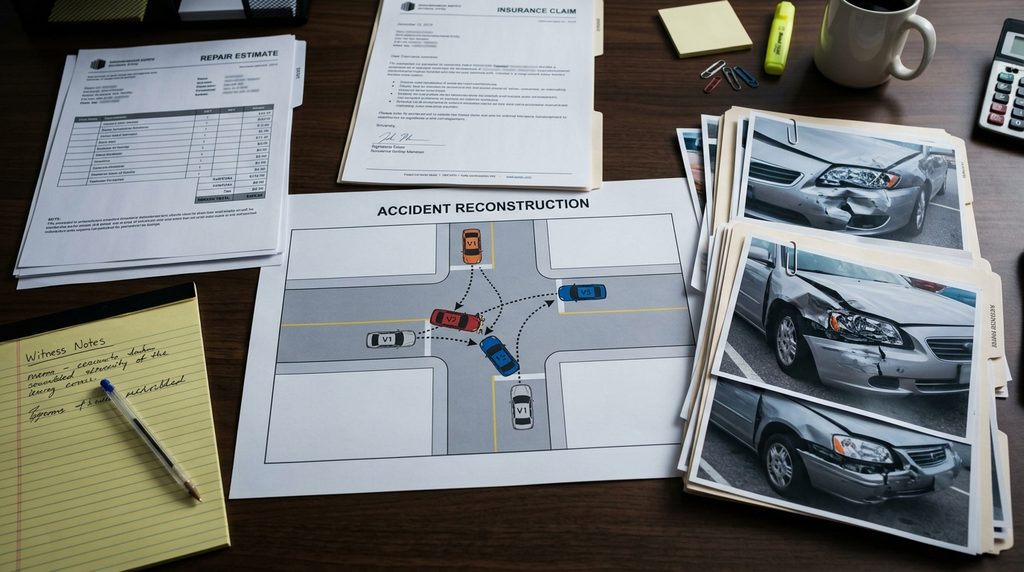
Damage evidence may show:
- Front-end impact
- Rear-end impact
- Side-impact damage
- Multiple impact points
- Crush direction
- Airbag deployment
- Broken glass location
- Interior damage
- Seat belt use
- Vehicle resting positions
- Whether one vehicle was pushed into another
- Whether a second impact occurred after the first
Repair estimates, total loss reports, and photos taken before repairs can help document the crash sequence.
Video Evidence and Dashcam Footage
Video can be one of the strongest types of evidence in a multi-vehicle accident. It may show the order of impacts, traffic signal status, lane changes, speed, braking, vehicle positions, and witness locations.
Potential video sources include:
- Dashcams
- Traffic cameras
- Highway cameras
- Business security cameras
- Gas station cameras
- Parking lot cameras
- Doorbell cameras
- Truck or bus cameras
- Rideshare vehicle cameras
- Delivery vehicle cameras
- Nearby building cameras
Video may be overwritten quickly, so preservation requests should be made early.
Witness Statements
Witnesses may help explain what happened before, during, and after the crash. This is especially important when drivers give conflicting versions of events.
Witnesses may provide information about:
- Which vehicle caused the first impact
- Whether traffic was stopped
- Whether a driver was speeding
- Whether a driver ran a red light
- Whether a driver changed lanes suddenly
- Whether a vehicle was following too closely
- Whether a truck or bus was involved
- Whether a driver appeared distracted
- Whether a vehicle left the scene
Witness names, phone numbers, emails, and written statements should be preserved as soon as possible.
Accident Reconstruction in Complex Multi-Vehicle Claims
Some multi-vehicle crashes require accident reconstruction because the impact sequence is unclear. An expert may review photos, measurements, vehicle damage, roadway evidence, reports, witness statements, and video.
Accident reconstruction may help evaluate:
- Vehicle speeds
- Braking distance
- Impact angles
- Crash sequence
- Lane positions
- Vehicle movements
- Visibility
- Reaction time
- Whether one vehicle pushed another
- Which impact caused the injury
- Whether a driver had time to avoid the crash
Accident reconstruction is not needed in every case, but it may be useful when several parties blame each other.
Medical Causation in Multi-Impact Crashes
Medical causation can become more complicated when the injured person was hit multiple times. The insurer may ask whether the first impact, second impact, or later impact caused the injury.
Medical causation evidence may include:
- Emergency medical records
- Imaging reports
- Specialist records
- Physical therapy notes
- Pain management records
- Surgery records
- Medical opinions
- Timing of symptom onset
- Photos of vehicle damage
- Seat position and airbag evidence
- Description of each impact
- Prior medical records
The medical file should clearly explain when symptoms began, which body parts were injured, and how the crash affected the person.
Multi-Vehicle Crashes and Pre-Existing Conditions
Insurance companies may argue that injuries were caused by pre-existing conditions rather than the crash. This is common when the injured person has prior neck pain, back pain, arthritis, disc findings, old fractures, or previous accident claims.
A pre-existing condition does not automatically defeat a claim. The key questions are:
- What symptoms existed before the crash?
- Were symptoms active or stable before the crash?
- Did symptoms worsen after the crash?
- Did the crash cause new pain?
- Did treatment needs increase?
- Did work restrictions change?
- Did imaging show new or worsened findings?
- Did a doctor connect the aggravation to the crash?
Before-and-after medical records can help explain what changed after the accident.
Insurance Coverage in Multi-Vehicle Claims
Insurance coverage may be one of the most important parts of a multi-vehicle accident claim. Several insurers may be involved, and each insurer may take a different position.
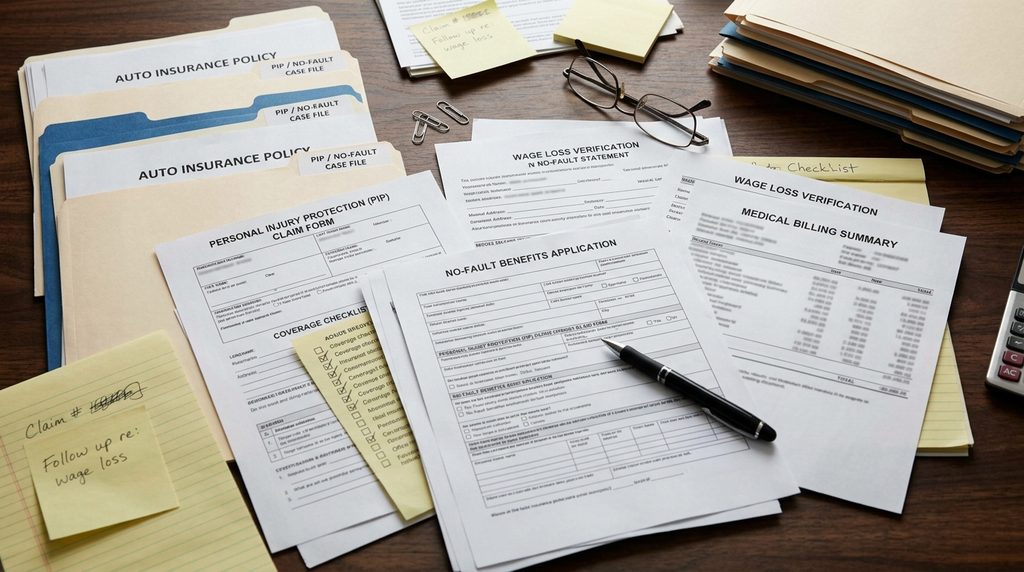
Coverage sources may include:
- No-fault coverage
- Bodily injury liability coverage
- Property damage coverage
- Commercial auto coverage
- Rideshare or delivery coverage
- Employer insurance
- Trucking company coverage
- SUM coverage
- Uninsured motorist coverage
- Umbrella or excess policies
- MVAIC, when no applicable insurance exists and eligibility rules are met
Every involved vehicle should be reviewed for insurance coverage, ownership, and driver status.
Policy Limits and Multiple Injured People
Policy limits can become a major issue when several people are injured in one crash. One driver may have a per-person limit and a per-accident limit. If several injured people make claims against the same policy, the per-accident limit may need to be divided.
Policy limit issues may involve:
- Multiple injured claimants
- Minimum insurance limits
- Commercial policy limits
- Excess coverage
- Umbrella coverage
- SUM coverage
- Multiple liability policies
- Settlement allocation
- Lien and reimbursement issues
- Competing settlement demands
A serious multi-vehicle crash should include a full insurance policy review before settlement.
What If One Driver Was Uninsured?
If one driver was uninsured, the injured person may still have possible insurance options. The available options depend on the person’s role, household insurance, no-fault eligibility, and policy language.
Potential options may include:
- No-fault benefits
- Uninsured motorist coverage
- SUM coverage
- Household auto policy coverage
- MVAIC, when no other coverage applies and eligibility rules are met
- Claims against other insured drivers
- Commercial coverage, if a business vehicle was involved
- Claims against a vehicle owner or employer
An uninsured driver does not automatically mean there is no recovery path.
Settlement Value in Multi-Vehicle Accident Claims
Settlement value depends on liability, injury severity, medical proof, comparative fault, policy limits, number of defendants, future care, lost income, pain and suffering, and litigation risk.
Settlement factors may include:
- Crash sequence
- Number of impacts
- Number of at-fault drivers
- Strength of evidence
- Serious injury proof
- Medical treatment
- Surgery or injections
- Future care needs
- Lost wages
- Work restrictions
- Pre-existing conditions
- Comparative fault
- Multiple insurance policies
- Multiple injured people
- Liens and reimbursement claims
Publicly available personal injury case results may provide general context, but every claim depends on its own facts, injuries, evidence, insurance coverage, and applicable law.
Common Insurance Company Arguments
Insurance companies may raise several arguments in multi-vehicle accident claims. These arguments often focus on fault allocation, medical causation, and policy limits.
Common arguments include:
- Another driver caused the crash.
- The injured person was partly at fault.
- The first impact did not cause the injury.
- A later impact caused the injury.
- The injuries were pre-existing.
- Treatment was delayed.
- Medical care was excessive.
- Vehicle damage was minor.
- Policy limits are low.
- Several claimants must share coverage.
- No serious injury was proven.
- The crash sequence is unclear.
- The claim should be handled by another insurer.
A strong claim should answer these arguments with evidence, medical records, and a clear timeline.

Practical Multi-Vehicle Accident Claim Review Chart
| Claim Issue | Why It Matters | Useful Evidence |
| Crash sequence | Shows which vehicle caused each impact | Police report, vehicle damage, video |
| Fault allocation | Determines how responsibility may be shared | Witness statements, traffic laws, reconstruction |
| No-fault benefits | Helps cover certain economic losses | No-fault forms, medical bills, wage records |
| Serious injury | May support pain and suffering recovery | Medical records, imaging, surgery notes |
| Multiple insurers | Affects settlement and coverage review | Policy letters, claim numbers, coverage disclosures |
| Multiple claimants | May affect available policy limits | Injury records, policy limits, settlement allocation |
| Commercial vehicle involvement | May create additional evidence and insurance sources | Employer records, dashcam, dispatch data |
| Comparative fault | May reduce damages | Photos, video, statements, roadway evidence |
Common Mistakes After a Multi-Vehicle Accident
Some mistakes can make a valid claim harder to prove.
Common mistakes include:
- Not calling police
- Leaving before all vehicles are identified
- Not photographing every vehicle
- Not collecting all driver insurance information
- Not getting witness names
- Not preserving dashcam footage
- Not seeking timely medical care
- Missing no-fault notice deadlines
- Not reporting all symptoms
- Assuming only one driver is responsible
- Accepting an early settlement before coverage is reviewed
- Not checking SUM coverage
- Ignoring commercial vehicle evidence
- Posting about the crash on social media
- Not saving insurance letters and claim numbers
A multi-vehicle claim should be organized carefully from the beginning.
How to Organize a Multi-Vehicle Accident Claim File
A well-organized file can help explain the crash sequence, insurance coverage, medical treatment, and damages.
Useful folders may include:
- Police report
- DMV MV-104 report
- Driver and vehicle information
- Insurance information for every vehicle
- Scene photos
- Vehicle damage photos
- Witness information
- Dashcam footage
- Surveillance footage requests
- Medical records
- Medical bills
- Imaging reports
- Physical therapy records
- Work restriction notes
- Wage loss documents
- No-fault forms
- Insurance correspondence
- Policy documents
- Repair estimates
- Settlement offers
- Lien letters
Keeping documents organized by date can make the claim easier to evaluate.
Deadlines Still Matter
Multi-vehicle accident claims may involve several deadlines. These may include DMV reporting, no-fault notice, medical bill submissions, lost wage proof, SUM notice, public entity notice, policy notice, and lawsuit deadlines.
Important timing issues may include:
- MV-104 crash report timing
- No-fault written notice timing
- Medical bill submission timing
- Lost wage documentation
- Insurance policy notice
- SUM notice
- MVAIC deadlines, if applicable
- Public entity notice, if a government vehicle or roadway issue is involved
- Lawsuit filing deadlines
- Discovery deadlines
- Settlement release timing
New York Courts lists three years for car accident claims and many negligence-based personal injury claims, but shorter insurance and notice deadlines may apply depending on the facts. New York Courts
When Legal Guidance May Be Useful
Legal guidance may be useful when a crash involved several vehicles, multiple insurers, serious injuries, conflicting driver statements, commercial vehicles, uninsured drivers, policy limit issues, no-fault denials, disputed medical causation, or unclear fault allocation.
A multi-vehicle accident claim review may require police reports, DMV reports, vehicle damage photos, witness statements, video footage, medical records, no-fault documents, insurance letters, policy disclosures, wage records, repair estimates, expert review, and settlement history.
People researching local support may review a Farmingdale personal injury office when looking for Long Island motor vehicle accident claim information.
FAQs About Multi-Vehicle Accident Claims in New York
Who is responsible in a multi-vehicle accident?
Responsibility depends on the crash sequence and each driver’s conduct. One driver may be fully responsible, or several drivers may share fault. Police reports, photos, witness statements, video footage, and vehicle damage patterns can help determine liability.
Does no-fault insurance apply after a multi-vehicle crash?
No-fault benefits may apply after many New York motor vehicle accidents regardless of fault. Written no-fault notice generally must be submitted no more than 30 days after the accident unless a clear and reasonable justification exists for late notice. Department of Financial Services
Can more than one driver be at fault?
Yes. Multi-vehicle crashes often involve shared fault. For example, one driver may stop suddenly, another may follow too closely, and a third may fail to avoid the crash. Comparative fault rules may affect the final recovery.
What evidence is most important after a multi-vehicle crash?
Important evidence may include police reports, DMV reports, vehicle damage photos, scene photos, dashcam footage, surveillance video, witness statements, medical records, no-fault forms, insurance letters, and policy documents.
What happens if several injured people are claiming against one policy?
If several people are injured, the available per-accident policy limit may need to be shared. This can affect settlement timing, allocation, negotiations, and whether additional insurance sources should be reviewed.
Final Thoughts
Multi-vehicle accident claims in New York require careful review because liability, insurance coverage, medical causation, policy limits, and settlement value may all be disputed. The strongest claim usually starts with early evidence preservation, complete medical documentation, no-fault notice, insurance coverage review, witness information, vehicle damage records, and a clear timeline showing how each impact happened and how the crash affected the injured person’s health, work, and daily life.