
Scrub bags help nurses, healthcare workers, and students keep daily essentials organized between home, work, school, clinical rotations, and busy shift schedules. A good bag should hold work items without becoming cluttered, uncomfortable, or difficult to clean.
Healthcare workers comparing scrub bags for nurses should consider size, compartments, comfort, durability, pocket layout, wipeable materials, shoe storage, laptop or notebook space, and how the bag supports real work routines. The right bag should make daily transitions easier while keeping personal and professional items separated.
Quick Answer
The best scrub bags for nurses are durable, organized, comfortable to carry, easy to clean, and large enough for shift essentials without becoming oversized. Nurses should look for compartments for pens, badge items, snacks, water, extra layers, notebooks, stethoscope accessories, shoes, chargers, and personal items, while keeping workplace policies and infection-control expectations in mind.
Healthcare workers choosing scrub bags should review:
- Bag size and daily capacity
- Backpack, tote, duffel, or satchel style
- Interior and exterior compartments
- Water bottle storage
- Shoe or laundry separation
- Easy-clean materials
- Zipper quality
- Strap comfort
- Laptop, tablet, or notebook space
- Stethoscope and small tool storage
- Personal item separation
- Workplace or school storage rules
Why Scrub Bags Matter for Healthcare Workers
Healthcare workers often carry more than expected. A typical workday may include scrubs, shoes, badge items, snacks, water, notebooks, pens, chargers, small tools, and personal items. Students may also need laptops, clinical paperwork, reference materials, and extra uniform pieces.
A scrub bag can help with:
- Keeping shift essentials organized
- Separating clean and used items
- Carrying extra layers
- Storing school or clinical materials
- Reducing pocket overload
- Supporting commute routines
- Protecting small work tools
- Avoiding forgotten items
- Keeping personal items easier to find
A good bag should support the worker’s routine rather than becoming another item to manage.
Bag Style Should Match the Daily Routine
Not every healthcare worker needs the same bag style. A nurse working long hospital shifts may need a different bag than a dental assistant, medical assistant, veterinary technician, or healthcare student.
Common scrub bag styles include:
- Backpacks
- Tote bags
- Satchels
- Duffel bags
- Crossbody bags
- Work bags with laptop sections
- Compact accessory bags
- Larger equipment-style bags
Workers comparing medical equipment bags should choose based on how much they carry, how they commute, and whether they need hands-free movement.
Backpack Scrub Bags
Backpacks are useful for workers who carry several items and want even weight distribution. They can work well for nurses, students, commuters, and anyone carrying books, laptops, shoes, lunch, water bottles, and personal items.

Backpacks may be helpful for:
- Nursing students
- Medical students
- Workers walking long distances
- Public transit commuters
- Staff carrying laptops or tablets
- Workers who need hands-free carrying
- Healthcare professionals carrying extra shoes or layers
Workers comparing medical equipment backpacks should check strap padding, back comfort, pocket layout, and whether the bag stands up well when packed.
Tote Bags for Healthcare Work
Tote bags can be convenient because they are easy to access and simple to carry. They may work well for healthcare workers who carry fewer items or need quick access to personal essentials.
Tote bags may be helpful for:
- Clinic staff
- Dental workers
- Front-office clinical employees
- Workers carrying light daily items
- Staff who prefer open organization
- Workers who do not need laptop storage
- People who want easy access to snacks, keys, and badge items
However, totes can become uncomfortable if overloaded. Workers carrying heavy items may prefer a backpack or structured work bag.
Duffel Bags for Longer Shifts
Duffel-style bags may be useful for workers who carry shoes, extra scrubs, jackets, meal prep, gym clothes, or overnight shift items. They provide more open space but may need smaller pouches or organizers to prevent clutter.
Duffel bags may be helpful for:
- Long shifts
- Overnight shifts
- Workers changing at work
- Staff carrying extra uniforms
- Healthcare workers with gym routines
- Students carrying clinical and personal items
- Workers who need shoe or laundry separation
The main concern with duffels is organization. A large bag without compartments can quickly become messy.
What Nurses May Carry in a Scrub Bag
Every workplace and role is different, but many nurses and clinical workers carry a mix of professional, personal, and comfort items.
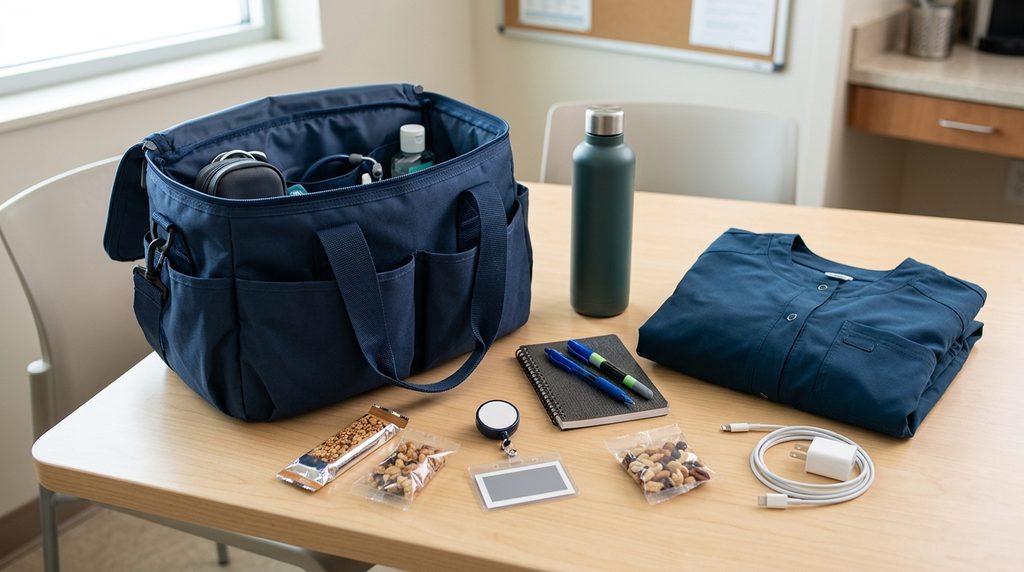
Common scrub bag items may include:
- Badge and badge reel
- Pens and markers
- Small notebook
- Stethoscope case
- Phone charger
- Water bottle
- Snacks or meal items
- Extra socks
- Extra scrub top
- Lightweight jacket
- Underscrub layer
- Hair ties or clips
- Hand lotion
- Lip balm
- Small hygiene items
- Compression socks
- Work shoes or shoe covers, if needed
- Laptop or tablet, if used for school or work
A scrub bag should make these items easier to find, not harder.
Organization Is More Important Than Size Alone
A large bag is not always better. Oversized bags can become heavy, messy, and difficult to carry. A smaller organized bag may work better than a large bag with no structure.
Good organization may include:
- Separate front pockets
- Interior zip pockets
- Pen slots
- Water bottle holders
- Shoe compartments
- Laptop or tablet sleeves
- Key clips
- Mesh pockets
- Small accessory pouches
- Easy-access side pockets
- Dividers for clean and personal items
The goal is to reduce digging through the bag during a busy shift.
Clean and Used Items Should Stay Separate
Healthcare workers may carry clean items, personal belongings, extra clothing, or used items in the same general bag. Separation can help keep the bag more organized and reduce cross-contact between items.
Useful separation features may include:
- Separate shoe compartment
- Zip pouches
- Laundry bag insert
- Waterproof pocket
- Dedicated clean uniform section
- Separate snack or lunch area
- Small tool pouch
- Personal item compartment
The CDC explains that Standard Precautions are used for all patient care and include infection-prevention practices across healthcare settings. Bag use, laundering, and storage should follow employer policy, school policy, and facility expectations.
Easy-Clean Materials Are Practical
Scrub bags may be placed in cars, lockers, break rooms, classrooms, clinical areas, or commute spaces. Materials that are easier to wipe or maintain can be more practical than fabrics that stain, absorb odors, or collect lint heavily.
Healthcare workers should consider:
- Wipeable exterior material
- Durable lining
- Smooth zippers
- Reinforced bottom
- Water-resistant pockets
- Darker or practical colors
- Fabric that does not attract lint easily
- Whether the bag can be cleaned according to care instructions
A bag does not need to be medical-grade to be useful, but it should be realistic for healthcare routines.
Strap Comfort Matters
A scrub bag may look organized but become uncomfortable if the straps dig into the shoulder or the weight is uneven. This matters especially for workers who commute, walk across large campuses, or carry heavy items.
Before buying, healthcare workers should check:
- Shoulder strap width
- Strap padding
- Backpack strap adjustability
- Handle comfort
- Bag weight when empty
- How the bag feels when packed
- Whether straps stay in place
- Whether the bag balances well
A comfortable carry style can make a noticeable difference during long workweeks.
Water Bottle and Meal Storage
Many healthcare workers bring drinks, snacks, or meals because shifts can be long and break times may vary. A good scrub bag should make food and drink storage practical without risking spills on other items.
Helpful features may include:
- Side water bottle pocket
- Leak-resistant pocket
- Separate lunch space
- Easy-access snack pocket
- Interior pouch for utensils
- Space for a small lunch bag
- Structured bottom to help containers stay upright
A water bottle pocket can be especially useful because it keeps drinks away from papers, electronics, and clothing.
Laptop, Tablet, and Student Storage
Healthcare students often need more than a standard work bag. Clinical rotations, labs, and classes may require notebooks, laptops, tablets, books, documents, pens, and clinical paperwork.
Students should look for:
- Laptop sleeve
- Tablet section
- Notebook space
- Pen pockets
- Folder storage
- Charger pocket
- Water bottle holder
- Separate uniform or shoe area
- Comfortable backpack straps
- Durable zipper construction
A student bag should support both classroom and clinical use without becoming too bulky.
Stethoscope and Tool Storage
Many healthcare workers carry small tools or accessories that should not be thrown loosely into a bag. A stethoscope, badge accessories, scissors, penlights, and small supplies can be easier to protect with dedicated storage.
Useful storage options include:
- Small zip pouch
- Hard stethoscope case
- Interior mesh pocket
- Pen organizer
- Tool sleeve
- Side pocket
- Separate accessory compartment
Workers who carry stethoscopes or small clinical tools should check whether the bag protects items from bending, tangling, or being buried under heavier objects.
Bags Should Not Replace Workplace Storage Rules
Some workplaces have rules about where personal bags can be stored. A bag that works well for commuting may still need to fit inside a locker, cabinet, break room shelf, or designated storage area.
Before buying, workers should check:
- Locker size
- Break room storage rules
- Facility bag policies
- Whether bags can enter clinical areas
- Whether personal bags must stay outside care areas
- Whether school programs require specific storage
- Whether large bags are inconvenient during rotations
The right bag should fit the worker’s actual storage situation.
Scrub Bags for Nursing Students
Nursing students often carry more than working professionals because they move between class, simulation labs, clinical rotations, study time, and sometimes work shifts.
A nursing student bag may need space for:
- Laptop or tablet
- Notebook
- Pens and highlighters
- Clinical paperwork
- Stethoscope case
- Water bottle
- Snacks
- Extra scrub top
- Compression socks
- Small personal items
- Reference materials
- Chargers
- Badge items
A backpack or structured satchel can be helpful for students because it supports both school and clinical organization.
Scrub Bags for Clinic Workers
Clinic workers may need a lighter setup than hospital-based staff. Medical assistants, front-office clinical workers, dental assistants, and outpatient employees may prefer compact bags with easy access.
A clinic work bag may need space for:
- Pens
- Badge
- Small notebook
- Phone charger
- Water bottle
- Lunch or snacks
- Jacket or underscrub
- Personal hygiene items
- Keys and wallet
A smaller organized bag may work better than a large duffel for daily clinic work.
Scrub Bags for Long Shifts
Long shifts may require extra comfort items and backup clothing. Workers on extended shifts may need more space but still need organization.
Helpful long-shift items may include:
- Extra socks
- Jacket or underscrub
- Snacks
- Meal containers
- Water bottle
- Phone charger
- Personal hygiene items
- Hair ties
- Compression socks
- Small first-aid or comfort pouch
- Spare scrub top, if allowed
A bag for long shifts should balance capacity with comfort. A bag that becomes too heavy may create its own inconvenience.
Scrub Bags for Dental and Veterinary Teams
Dental and veterinary workers often need bags that are practical for smaller workspaces, active movement, and sometimes extra uniform changes. Veterinary workers may also want materials that are easy to clean and do not hold hair or odor easily.
Helpful features may include:
- Wipeable material
- Compact size
- Durable zippers
- Secure pockets
- Separate shoe or clothing space
- Water bottle storage
- Small tool pockets
- Easy-carry straps
The best bag depends on whether the worker changes at work, commutes in scrubs, or carries extra clothing.
Scrub Bags for Team Uniform Planning
Some healthcare teams may want consistent bags, especially for students, mobile care teams, group uniform programs, or staff who travel between locations. Team bag planning should consider function before appearance.
Team buyers should review:
- Approved bag type
- Size range
- Color preference
- Embroidery or logo placement
- Role-specific storage needs
- Laptop or tablet needs
- Water bottle storage
- Shoe or laundry compartments
- Reorder availability
- Staff feedback before ordering
A team bag should be practical for the people who will actually carry it.
What to Avoid in a Scrub Bag
Not every bag works well for healthcare routines. Some bags look useful but fail during daily use.
Common issues include:
- Too few compartments
- Weak zippers
- Thin straps
- Poor weight distribution
- No water bottle pocket
- Material that stains easily
- No small-item storage
- Too much open space
- Bag too large for lockers
- Bag too small for shift needs
- Interior lining that is hard to clean
- No separation for shoes or used clothing
Workers should think through their normal day before choosing a bag.
How to Pack a Scrub Bag Efficiently
Packing a scrub bag well can make the bag more useful. The goal is to keep daily items visible, separated, and easy to access.
A simple packing system may include:
- One pocket for badge and keys
- One section for food and water
- One pouch for pens and small tools
- One section for clean clothing
- One separate pouch for personal items
- One sleeve for laptop or notebook
- One case for stethoscope or delicate tools
- One washable pouch for used items, if needed
Keeping the same setup each day can reduce forgotten items and save time before shifts.
Local Try-On Can Help With Bag Choice
Bag size, strap feel, pocket layout, and weight can be hard to judge from photos alone. Trying a bag in person can help healthcare workers understand whether it fits their daily routine.
Healthcare workers can review a local medical scrub store profile before planning an in-person visit.
Local try-on support is useful for:
- First-time scrub bag buyers
- Nursing students
- Workers comparing backpacks and totes
- Staff checking locker-friendly sizes
- Buyers testing strap comfort
- Workers checking material feel
- Team uniform buyers
- Shoppers comparing pocket layouts
Care and Maintenance Should Be Reviewed
A scrub bag may be used every workday, so maintenance matters. Workers should review care instructions before buying, especially if the bag will carry shoes, uniforms, food, or clinical accessories.
Before buying, check:
- Whether the exterior can be wiped
- Whether the lining is easy to clean
- Whether the bag can air out
- Whether zippers feel durable
- Whether straps are reinforced
- Whether the bottom is structured
- Whether pockets collect lint
- Whether the bag keeps shape after use
- Whether care instructions match real work routines
A bag that is hard to clean may not be practical for daily healthcare use.
How to Compare Scrub Bags
No scrub bag is right for every healthcare worker. The best choice depends on role, commute, storage needs, workplace policy, and how much the worker carries.
Before buying, ask:
- Does the bag hold daily essentials without overpacking?
- Does it fit in the available storage space?
- Are the straps comfortable?
- Are pockets easy to access?
- Is there room for water and snacks?
- Can clean and used items stay separate?
- Is the material easy to maintain?
- Does it support school or clinical needs?
- Does it work for team uniform planning?
- Will it still feel practical after several weeks of use?
The right bag should make the workday easier, not more cluttered.
Common Mistakes When Buying Scrub Bags
Choosing size without checking storage
A large bag may hold more items but may not fit inside lockers, shelves, or designated storage areas.
Ignoring strap comfort
Thin straps can become uncomfortable when the bag is packed with water, food, shoes, notebooks, or electronics.
Buying a bag with too few compartments
Without compartments, small items can get buried and daily organization becomes harder.
Forgetting clean and used item separation
Shoes, extra uniforms, food, electronics, and personal items should not all sit loose in one main compartment.
Choosing style before function
A bag should look professional, but it should also support the worker’s actual commute, role, and shift needs.
Overpacking every shift
A scrub bag should carry essentials. Too many unnecessary items can make the bag heavy and disorganized.

Final Checklist Before Buying Scrub Bags for Nurses
Before choosing a scrub bag, healthcare workers should confirm:
- Preferred bag style
- Daily carrying needs
- Locker or storage fit
- Strap comfort
- Bag weight when empty
- Pocket layout
- Water bottle storage
- Lunch or snack space
- Shoe or clothing separation
- Laptop or notebook space
- Stethoscope or tool storage
- Easy-clean material
- Zipper durability
- Workplace or school policies
- Return or exchange policy
Scrub bags should help healthcare workers stay organized, prepared, and comfortable between shifts, clinics, classes, and commutes. The best bag should match the worker’s role, routine, storage space, and daily essentials.
FAQs
What should nurses carry in a scrub bag?
Nurses may carry pens, badge items, a small notebook, water bottle, snacks, phone charger, extra socks, a scrub jacket, underscrub layer, stethoscope case, personal hygiene items, and small comfort essentials. The exact items depend on workplace policy, shift length, and storage space.
What type of bag is best for healthcare workers?
The best bag depends on the worker’s routine. Backpacks are useful for heavier loads and commuting. Totes can work for lighter daily items. Duffel bags may help with shoes, extra clothing, or long shifts. Organization, comfort, and easy-clean materials matter most.
Are backpacks good scrub bags for nurses?
Backpacks can be good scrub bags for nurses because they distribute weight across both shoulders and often include compartments for water, food, electronics, notebooks, and small supplies. Workers should check strap comfort, pocket layout, locker fit, and easy-clean materials.
Do nursing students need larger scrub bags?
Nursing students often need larger or more structured bags because they may carry laptops, notebooks, clinical paperwork, stethoscope cases, water, snacks, and uniform items. A backpack or organized satchel can help support both classroom and clinical needs.
How should healthcare workers keep scrub bags organized?
Healthcare workers can keep scrub bags organized by using separate compartments or pouches for badge items, pens, food, water, personal items, clean clothing, used items, and tools. Keeping the same packing system each day can reduce forgotten items and clutter.